Commercial Contract Drafting Guide Under Turkish Law


Commercial contract drafting and executive review under Turkish commercial law.
Key Takeaways
- Under TTK Article 18/2, commercial entities are bound by the prudent merchant (*basiretli tacir*) doctrine, precluding basic defenses of ignorance or commercial shortsightedness.
- Contractual penalties (*cezai şart*) between merchants cannot be reduced for excessiveness pursuant to TTK Article 22, unless the debtor proves imminent economic ruin (*ekonomik mahv*) via forensic accounting.
- Commercial termination and default notices (*ticari sözleşme feshi*) must strictly follow statutory notice channels (Notary, Registered Mail, or KEP) under TTK Article 18/3 to remain legally valid.
- Mandatory commercial mediation under TTK Article 5/A is a compulsory procedural step prior to filing any monetary commercial claim in the Commercial Court of First Instance.
Commercial Contract Drafting Guide for Companies: Critical Clauses and Risk Management Under Turkish Commercial Law
Commercial agreements form the bedrock of corporate enterprise. Whether licensing software, engaging in cross-border supply chains, or formalizing joint ventures, the precision of your documentation determines your exposure to operational and judicial risk. In commercial practice, disputes rarely stem from bad faith alone; more often, they emerge from vague clauses, misplaced trust in generic online templates, or misunderstandings of mandatory statutory protections.
Under Turkish law, corporate transactions operate under a dual statutory framework governed by the Turkish Commercial Code (Law No. 6102 - TTK) and the Turkish Code of Obligations (Law No. 6098 - TBK). Companies face an elevated standard of care: merchant status triggers legal duties that do not apply to regular consumers or individuals.
This comprehensive guide examines the critical mechanics of commercial contract drafting (ticari sözleşme hazırlama), dissects high-stakes provisions such as contractual penalties (cezai şart), details formal contract termination rules (ticari sözleşme feshi), and analyzes how courts interpret corporate responsibility under the prudent merchant doctrine (ttk basiretli tacir).
Disclaimer: This guide is prepared for general informational purposes only and does not constitute formal legal advice or an attorney-client relationship. Commercial disputes require factual and legal assessment by a qualified attorney.
The Prudent Merchant Principle (Basiretli Tacir): The Anchor of Corporate Liability
One of the most consequential concepts in Turkish commercial law is codified in Article 18, Paragraph 2 of the Turkish Commercial Code (TTK): every merchant is statutorily required to act as a “prudent businessperson” (basiretli bir iş adamı gibi hareket etmek) in all commercial activities.
When drafting and executing company agreements (şirket sözleşmeleri), this standard carries far-reaching legal ramifications:
- Heightened Standard of Foresight: A commercial entity cannot readily argue that it failed to understand contractual obligations, miscalculated financial feasibility, or overlooked routine commercial risks. Turkish courts evaluate whether a reasonably prudent executive, possessing typical commercial foresight, would have foreseen the outcome.
- Strict Application of Agreed Terms: Unlike consumer law, where courts readily balance bargaining inequalities, courts evaluating transactions between merchants presume that both parties possessed the acumen, resources, and leverage to negotiate balanced terms.
- Foreclosure of Certain Defenses: Claims based on unread terms, unexpected market fluctuations, or failure to conduct adequate due diligence face strict judicial scrutiny when brought by commercial entities.
In our experience managing commercial litigation, companies frequently run into severe liability because they treat standard commercial contracts as casual formalities. Under the ttk basiretli tacir standard, signing an agreement legally binds your company to virtually all negotiated terms, severely limiting retroactive defenses in court.
Signatory Authority and Legal Capacity: Preventing Void Transactions
A contract is only as binding as the signature affixed to it. One of the most prevalent pitfalls in corporate transactions involves executing agreements with individuals who lack binding representational authority.
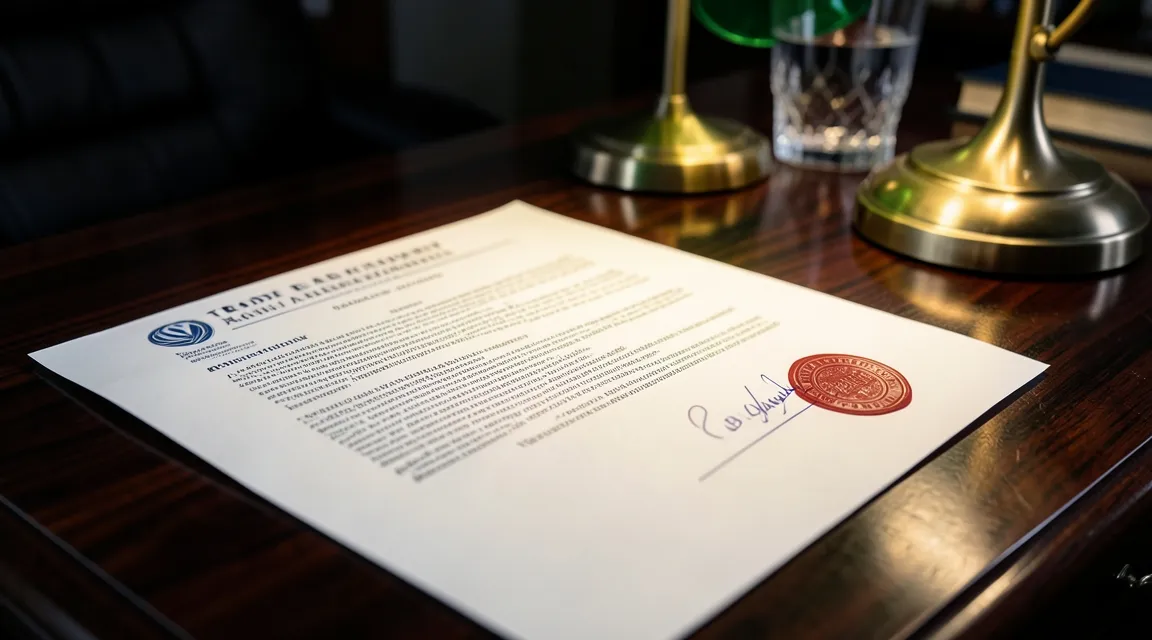
Validating Corporate Representatives
Before finalizing any transaction, counsel must verify the opposing party’s execution capacity through official records:
- The Trade Registry Gazette (Ticaret Sicil Gazetesi): Verifies the company’s valid registration, current corporate name, and official managers.
- Notarized Signature Circular (İmza Sirküleri): Confirms which officers have binding signing authority, whether authority is sole (münferit) or joint (müşterek), and any monetary caps or transaction-type limitations.
- Central Commercial Registry System (MERSİS): Useful for real-time verification of company representation status.
If a contract is executed by an unauthorized representative (yetkisiz temsilci), the agreement does not automatically bind the corporation unless the company subsequently ratifies the transaction explicitly or implicitly. The unauthorized individual may face personal liability under Article 46 of the TBK, but the commercial entity itself may avoid performance obligations, leaving the counterparty with an insecure and prolonged recovery process.
[PRO-TIP: Never accept a digital or wet signature without attaching a verified, current copy of the signatory’s notarized signature circular (imza sirküleri) to the contract annexes.]
Contractual Penalty Clauses (Cezai Şart) and the TTK Art. 22 Bar on Judicial Reduction
Contractual penalties (cezai şart), governed by Articles 179 to 182 of the Turkish Code of Obligations (TBK), serve two primary purposes: compelling the debtor to perform their obligations on time and fixing damages in advance without requiring the non-breaching party to prove the actual loss in court.
The General Rule vs. Commercial Reality
Under standard obligations law (TBK Art. 182/last paragraph), judges possess equitable authority to reduce contractual penalties deemed excessive (fahiş cezai şart).
However, Article 22 of the Turkish Commercial Code completely alters this rule for merchants:
A merchant who has agreed to pay a penalty or excessive interest cannot request a reduction of such penalty or interest from the court on the ground that it is exorbitant.
Because of this statutory bar, a commercial company cannot walk into an Asliye Ticaret Mahkemesi (Commercial Court of First Instance) and simply assert that a penalty clause is disproportionately harsh.
The Judicial Exception: Economic Ruin (Ekonomik Mahv)
Through consistent jurisprudence, the Court of Cassation (Yargıtay) has recognized an equitable exception to the absolute bar of TTK Article 22:
- A penalty may be subject to judicial reduction or nullification if the enforcement of the penalty would lead to the merchant’s economic ruin (ekonomik mahvına sebep olması), effectively destroying its financial viability and ability to continue commercial operations.
- The Evidentiary Burden: The Court of Cassation requires strict evidentiary substantiation. Abstract claims of hardship are categorically rejected; courts require a comprehensive forensic accounting audit of the company’s financial ledgers, balance sheets, and debt-to-equity ratios by a court-appointed expert panel (bilirkişi heyeti).
- Furthermore, appellate courts have affirmed that the economic ruin defense must be actively asserted by the debtor; commercial courts will not evaluate this issue ex officio.
Navigating these stringent evidentiary thresholds and structuring enforceable, proportional risk-allocation mechanisms across complex cross-border or domestic transactions requires experienced legal guidance. If your company faces nuanced liability allocations or high-stakes corporate drafting, Contact EG Law Firm for Professional Legal Assistance.
Structuring Penalties: Three Primary Types
When structuring cezai şart provisions during commercial contract drafting, consider the statutory classifications under TBK Art. 179:
- Alternative Penalty (Seçimlik Cezai Şart): The creditor may demand either the performance of the primary obligation or the payment of the agreed penalty, but cannot claim both unless expressly stipulated.
- Cumulative Penalty (İfaya Eklenen Cezai Şart): Specifically designed for delay or improper performance. The creditor is entitled to demand both specific performance and the penalty payment.
- Repentance Penalty (Dönme Cezası): Allows a party to unilaterally withdraw from the agreement upon paying a predetermined forfeit sum.
Termination Clauses and Formal Statutory Notice Rules (Ticari Sözleşme Feshi)
Contract termination in commercial matters (ticari sözleşme feshi) is governed by strict statutory formalities under Turkish law. Many corporate managers mistakenly believe that sending an email or an informal WhatsApp message suffices to formally notify a counterparty of default or termination.

Mandatory Notice Formats: TTK Article 18, Paragraph 3
Under TTK Art. 18/3, notices of default (temerrüt), termination (fesih), or rescission (sözleşmeden dönme) between merchants must be executed through one of the following methods:
- Through a Turkish Notary Public (Noter kanalıyla),
- Via Registered/Certified Mail with Return Receipt (İadeli taahhütlü mektup),
- Via Telegram (Telgraf), or
- Through a Registered Electronic Mail (KEP - Kayıtlı Elektronik Posta) system utilizing secure electronic signatures.
Failure to observe these statutory notice methods renders the notification procedurally defective, meaning the counterparty may argue that default was never legally established, thereby shielding them from interest, penalty claims, or early termination damages.
Termination for Just Cause (Haklı Nedenle Fesih)
While parties may contractually define default events (e.g., non-payment within 15 business days, insolvency filing, regulatory revocation), statutory law reserves the inherent right to terminate long-term contracts for just cause. A just cause exists where the continuation of the contractual relationship becomes objectively unconscionable or commercially intolerable for the terminating party under the principle of good faith (TMK Art. 2).
[PRO-TIP: Always specify a clear cure period (e.g., 14 to 30 calendar days) within the default clause before unilateral termination takes effect, and verify that all default correspondence is delivered via Notary or KEP.]
Defensive Boilerplate Clauses: The Invisible Shield
Standard clauses often get overlooked during negotiations, yet they frequently decide the outcome of commercial litigation.
| Clause Type | Key Drafting Consideration | Primary Legal Reference |
|---|---|---|
| Limitation of Liability | Cannot exclude liability for willful misconduct (kasıt) or gross negligence (ağır kusur). Cap liability to a fixed amount (e.g., contract value). | TBK Art. 115 |
| Force Majeure (Mücbir Sebep) | Specifically define events (war, pandemics, natural disasters, embargoes); mandate prompt written notice and duty to mitigate losses. | TBK Art. 136-138 |
| Governing Law & Jurisdiction | Designate competent courts (e.g., Istanbul Çağlayan Courts) or an institutional arbitration body (e.g., ISTAC, ICC). | HMK Art. 17 / MTK |
| Confidentiality & Trade Secrets | Define duration beyond contract expiration; attach a specified cumulative contractual penalty for unauthorized disclosure. | TBK Art. 179 |
Commercial Dispute Resolution: Mandatory Mediation
Before filing a lawsuit involving monetary commercial disputes in Turkey, parties are statutorily required to complete Mandatory Commercial Mediation (Dava Şartı Arabuluculuk) pursuant to TTK Article 5/A. Filing an action before the Commercial Court without fulfilling this procedural requirement results in immediate procedural dismissal (usulden ret).


Pre-Execution Risk Audit Checklist
Before executing any commercial agreement, corporate counsel and business executives should review the following procedural checklist:
- Party Identification: Match exact corporate titles, tax numbers, and MERSİS records against the Trade Registry Gazette.
- Authority Audit: Collect valid, notarized signature circulars dated within the acceptable corporate review timeline.
- Penalty Balancing: Ensure penalty clauses are mathematically proportional to avoid claims of economic ruin while maximizing leverage.
- Notice Routing: Include official KEP addresses and formal corporate physical addresses for statutory notifications under TTK Art. 18/3.
- Clear Deliverables & SLAs: Avoid subjective performance criteria; articulate clear milestones, technical specifications, and delivery acceptance procedures.
- Dispute Forum: Specifically designate jurisdiction, avoiding ambiguous clauses such as “parties will seek amicable settlement” without a designated binding forum.
Strategic Conclusion and Recommended Action Steps
Drafting commercial agreements is not merely an administrative milestone; it is an active risk-allocation process. Under the strict requirements of the Turkish Commercial Code, particularly the prudent merchant standard (ttk basiretli tacir) and the non-reduction rule for contractual penalties (cezai şart), ambiguous wording can create irreversible liabilities.
To safeguard your company’s interests:
- Conduct an audit of your standard commercial contracts to replace informal default notices with compliant methods under TTK Art. 18/3.
- Review existing contractual penalties to confirm they correspond to specific operational breaches rather than blanket default.
- Consult with seasoned commercial litigation counsel to customize contracts to your company’s risk profile rather than relying on unvetted templates.
Frequently Asked Questions (FAQ)
Can a commercial company reduce an excessive contractual penalty in court under Turkish law?
As a general statutory rule under Article 22 of the Turkish Commercial Code (TTK), merchants cannot request a reduction of contractual penalties (cezai şart) on the sole ground of excessiveness. However, the Court of Cassation recognizes an exceptional defense: if enforcing the penalty would lead to the merchant's economic ruin (ekonomik mahv), the commercial court may evaluate balance sheets and grant an equitable reduction.
What happens if a termination notice is sent via standard email instead of a notary under TTK Art. 18/3?
Under TTK Article 18, Paragraph 3, default, termination, and rescission notices between merchants must be delivered via Notary Public, registered mail with return receipt, telegram, or Registered Electronic Mail (KEP). Sending notice via standard email does not satisfy the statutory formal requirement, creating substantial evidentiary risks and potentially rendering the termination legally ineffective.
What does the 'prudent merchant' (basiretli tacir) standard require from corporate executives?
Codified under TTK Article 18/2, the basiretli tacir doctrine holds commercial entities to a heightened standard of care, foresight, and diligence. Merchants cannot readily defend contractual breaches by arguing unfamiliarity with industry customs, failure to read contract terms, or unexpected financial hardship.
Is commercial mediation mandatory before filing a contract breach lawsuit in Turkey?
Yes. Pursuant to Article 5/A of the Turkish Commercial Code, commercial mediation (dava şartı arabuluculuk) is a mandatory procedural prerequisite for monetary claims. Initiating litigation before the Commercial Court without completing mediation will result in procedural dismissal of the lawsuit.
Can commercial parties completely exclude liability for gross negligence in their contract?
No. Under Article 115 of the Turkish Code of Obligations (TBK), any agreement that purports to eliminate liability in advance for willful misconduct (kasıt) or gross negligence (ağır kusur) is null and void (kesin hükümsüz). Limitation of liability clauses can only validly shield against slight negligence (hafif kusur).